Utility Locating Checklist Before Excavation
Excavation projects expose crews to serious risks when underground utilities remain unmarked. A complete utility locating checklist protects workers, infrastructure, and project budgets from preventable damage. Every dig site contains subsurface lines for water, gas, electricity, and telecommunications that require identification before excavation begins.
The true cost of utility strikes extends far beyond immediate repair expenses. Project delays, emergency response, and hidden costs multiply damage repair expenses by 29 times the initial fix. Following a systematic pre-excavation safety plan reduces these risks while ensuring compliance with California and federal regulations.
Key Takeaways
- Utility locating identifies subsurface lines before excavation, preventing $30 billion in annual damages across the United States
- Call 811 at least 2-3 days before digging for public utility marking and arrange private utility locating separately
- Ground Penetrating Radar (GPR) and electromagnetic utility detection locate both metallic and non-metallic lines accurately
- California Safe Dig Act requires compliance with Government Code 4216, with fines reaching $50,000 for violations
- Protective systems are mandatory for trenches deeper than 5 feet, with daily inspections by an OSHA Competent Person
What Utility Locating Is and Why It Matters Before You Dig
Utility locating prevents excavation crews from striking buried infrastructure during construction activities. Professional locators use specialized equipment to map subsurface utilities before any digging begins. This process identifies the exact position and depth of water lines, gas pipes, electrical cables, and telecommunication networks. Accurate utility mapping protects workers from injury and prevents service disruptions affecting entire communities.
The financial impact of skipping utility locating far exceeds the service cost. Excavation-related damages to underground utilities cost the United States approximately $30 billion per year. The average direct repair cost per utility strike incident reaches $4,000, but hidden costs, including project delays and emergency response, multiply total expenses significantly. For every dollar spent on utility marking and locating services, contractors save $4.62 from damage and downtime prevention.
The Purpose of Utility Locating
Utility locating finds and marks subsurface utilities, so crews know what lies below before breaking ground. This process protects water lines, gas pipes, electrical cables, and telecommunication networks from accidental strikes. Professional locators use electromagnetic utility detection for metallic lines and ground penetrating radar (GPR) for non-metallic materials. Both technologies provide precise depth measurements and horizontal positioning data.
Accurate utility identification prevents catastrophic failures that endanger workers and the public. Gas line strikes create explosion risks, while electrical cable damage causes electrocution hazards and widespread power outages. Water main breaks flood active construction sites and disrupt service to surrounding properties. Telecommunication cable damage interrupts emergency services and business operations across affected areas.
The Real Cost of Skipping It
The $30 billion annual cost of excavation-related damages represents only measurable direct expenses. The average direct repair cost per utility strike incident is $4,000 for materials and labor. However, hidden costs multiply damage repair costs by 29 times through project delays and emergency response. Lost productivity, equipment rental extensions, and regulatory fines compound the financial impact.
Project delays from utility strikes halt construction schedules for days or weeks pending repairs. Emergency response costs from utility damage include after-hours contractor rates and utility company mobilization fees. The ROI of $4.62 for every $1 spent on utility locating services makes professional marking an essential investment rather than an optional expense.
The Pre-Excavation Utility Locating Checklist
A comprehensive utility locating checklist ensures no critical steps are missed before excavation begins. Following this systematic approach protects workers, infrastructure, and project timelines from preventable incidents. Each step builds upon the previous one to create a complete subsurface utility map.
The checklist is divided into five distinct phases covering notification, location, verification, site preparation, and ongoing monitoring. Skipping any single step compromises the entire safety system and exposes projects to liability. Complete documentation at each phase provides evidence of due diligence for regulatory compliance.
Step 1: Notify and Plan (2 to 3 Days Before You Dig)
Call 811 at least 2-3 days before excavation to reach the national dig notification service. Confirm that 811 marks public utilities only and does not mark private lines on your property. This free service coordinates with utility companies to send locators to your site. Public utilities include municipal water, gas, electric, and telecommunication lines maintained by service providers.
Classify the soil type as A, B, or C according to OSHA standards for proper shoring selection. Identify surface encumbrances on the site, including pavement, landscaping, and existing structures that affect excavation methods. Soil classification determines protective system requirements and influences the choice of excavation equipment. Surface conditions impact utility detection accuracy and may require additional investigation before locating begins.
Step 2: Locate Public and Private Utilities
Confirm public utilities have been marked through the 811 request before proceeding with excavation planning. Arrange professional private utility locating for non-public lines, including irrigation, septic, private water, and electrical services. Private utilities fall outside 811 coverage and require specialized locating services to map accurately. Many sites contain both public and private infrastructure requiring complete underground utility mapping.
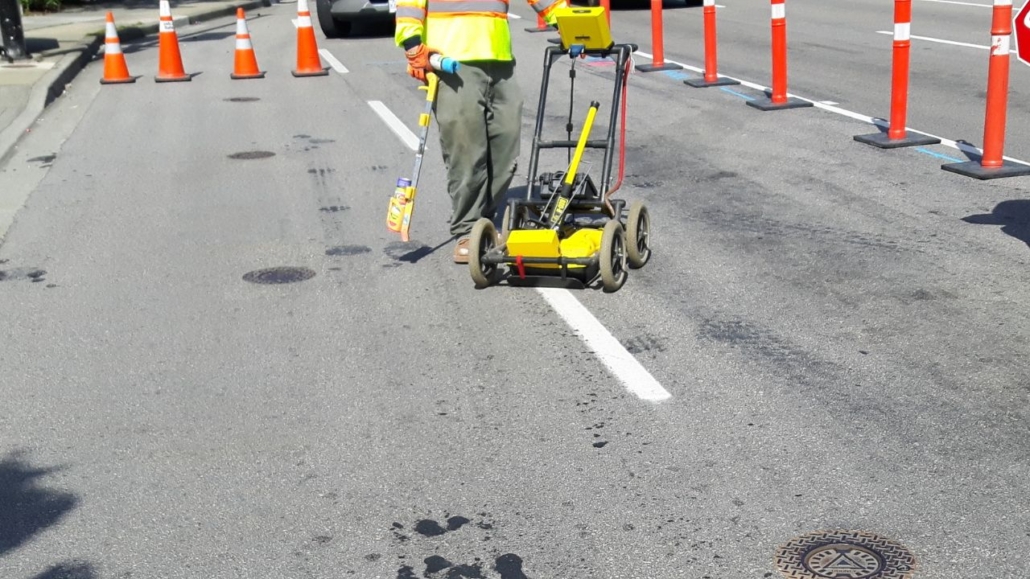
Use electromagnetic (EM) locating for metallic utilities, including steel and copper pipes and cables. Use ground penetrating radar (GPR) for both metallic and non-metallic utilities, including PVC, concrete, and fiber optic lines. EM locators detect electromagnetic fields generated by energized lines or applied tracer signals. GPR systems transmit radar pulses into the ground and measure reflected signals from subsurface objects.
Step 3: Verify and Document Each Utility
Pothole the site using hand-digging or vacuum excavation to confirm the exact location and depth. Hand-dig within the 18-24 inch tolerance zone around every marked utility before operating machinery. Visual verification eliminates uncertainty about utility positioning and reveals any unmarked infrastructure. Potholing services provide direct observation of subsurface conditions without extensive excavation.
Record locate data with GPS coordinates for future reference and regulatory documentation. Document all findings with photographs showing utility positions, depths, and surrounding conditions. GPS mapping creates permanent records that benefit future projects on the same site. Photographic evidence supports compliance reporting and insurance claims if incidents occur despite precautions.
Step 4: Set Up the Site for Safe Digging
Install protective systems for any trench deeper than 5 feet, including shoring, shields, or boxes. Provide ladders or ramps within 25 feet of workers in trenches deeper than 4 feet. These requirements protect workers from cave-ins and ensure safe egress during emergencies. Protective systems must match soil classification and excavation depth specifications.
Keep heavy equipment at least 2 feet from the trench edge to prevent edge collapse. Keep excavated spoils at least 2 feet from the trench edge to reduce surcharge loads. Equipment vibration and spoil pile weight destabilize trench walls and increase cave-in risk. Proper clearances maintain structural integrity throughout the excavation period.
Step 5: Monitor Conditions During Excavation
Assign an OSHA Competent Person to oversee excavation safety and enforce protective system use. Perform daily atmospheric testing for oxygen deficiency, toxic gases, and explosive vapors in confined trenches. The Competent Person must have training to recognize hazards and the authority to stop work. Atmospheric conditions change rapidly in trenches, requiring continuous monitoring throughout each shift.
Conduct daily structural inspections of trench walls, protective systems, and adjacent areas. Inspections must occur before each shift, after rain events, and following any ground disturbance. Daily documentation provides evidence of ongoing compliance with safety regulations. Structural deterioration develops quickly in excavations, making frequent assessment essential for worker protection.
Excavation Safety Regulations and Compliance
Federal and state regulations establish minimum safety standards for all excavation activities. Compliance protects workers from preventable injuries while shielding companies from regulatory penalties and civil liability. California utility line marking regulations impose stricter requirements than those of many other states.
Understanding applicable regulations helps contractors develop effective utility dig compliance programs. Regulatory requirements address notification, protective systems, competent person qualifications, and documentation standards. Penalties for non-compliance range from citations to criminal charges in cases involving fatalities.
California Requirements: Safe Dig Act and Cal/OSHA
California Government Code 4216 Safe Dig Act requires excavators to contact regional notification centers before digging. Cal/OSHA Article 6 Section 1541 establishes construction safety orders for excavations and trenching operations. The Safe Dig Act mandates at least two working days’ notice before excavation begins. Cal/OSHA regulations specify protective system requirements, inspection protocols, and competent person qualifications.
Fines up to $50,000 apply for failure to comply with the California Safe Dig Act. Excavators remain liable for all repair costs and consequential damages resulting from utility strikes. Criminal penalties may apply in cases involving gross negligence or willful violation of safety standards. Civil liability extends to property damage, service interruptions, and personal injuries caused by utility strikes.
Federal OSHA Requirements
OSHA Competent Person Certification is required for excavation safety oversight on all federal and most private projects. The competent person must complete training covering soil classification, protective systems, atmospheric hazards, and inspection protocols. Certification demonstrates knowledge of OSHA excavation standards and the ability to recognize hazardous conditions. Companies must designate competent persons in writing and provide documentation during inspections.
Federal OSHA standards apply to all construction employers regardless of state location. State-plan states like California may enforce standards equivalent to or more stringent than federal requirements. OSHA conducts workplace inspections and issues citations for excavation safety violations. Serious violations carry penalties up to $16,131 per occurrence, with higher amounts for willful violations.
Trenching Hazards and Protective Systems
Cave-ins pose the greatest risk to excavation workers, causing more fatalities than all other excavation hazards combined. Trenching and excavation rank among the most hazardous construction activities based on injury and fatality rates. A cubic yard of soil weighs approximately 3,000 pounds, creating crushing forces impossible to survive. Workers have seconds to escape once a cave-in begins, making prevention the only effective protection.
Protective systems are required for trenches deeper than 5 feet according to OSHA and Cal/OSHA standards. Trench shoring uses protective systems, including hydraulic supports, aluminum shields, and steel boxes, to prevent cave-ins. Hydraulic shoring systems provide adjustable support that adapts to varying trench widths and soil conditions. Aluminum trench shields and steel trench boxes create protected zones where workers can operate safely.
Why Compliance Pays Off
Companies spend 2.6% of their budgets on safety training compared to 3.6% spent on treating injuries. This imbalance reveals the cost-effectiveness of prevention compared to incident response and recovery. Safety training programs deliver an ROI of $4 to $6 for every dollar invested. Reduced insurance premiums, fewer lost-time incidents, and improved productivity contribute to measurable financial returns.
Contractors who prioritize utility locating experience fewer project delays and lower liability exposure. Compliance creates competitive advantages through improved bid acceptance rates and client retention. Safety performance increasingly influences project awards as owners recognize the correlation between safety records and project outcomes. Strong safety cultures attract skilled workers and reduce turnover costs in competitive labor markets.
Excavation Safety by the Numbers
Statistical analysis reveals patterns in excavation incidents that inform prevention strategies. Fatality trends, citation patterns, and workforce demographics provide context for safety program development. These numbers demonstrate both the severity of excavation hazards and the effectiveness of proper precautions.
Industry data guides resource allocation and training priorities for maximum impact. Understanding who performs excavation work helps tailor safety communications and compliance programs. Numbers translate abstract risks into concrete evidence supporting investment in protective measures.
Trenching Fatalities and Enforcement Trends
Excavation and trenching cause 40 fatalities annually on average in the United States. Trenching and excavation deaths totaled 39 in 2022, following 15 fatalities in 2021. This represents a 160% increase in fatalities from 2021 to 2022, prompting intensified enforcement. OSHA issued 629 citations for excavation safety violations in 2024 as part of heightened emphasis programs.
The fatality spike reflects both increased construction activity and persistent compliance gaps. Many incidents involve preventable causes, including inadequate protective systems and absent competent person oversight. Citations target repeat violators and companies demonstrating systemic safety failures. Enhanced enforcement aims to improve compliance through deterrence and public awareness.
Who Relies on Utility Locating (Industry Context)
Los Angeles employs over 308,000 construction workers across residential, commercial, and infrastructure projects. Latino workers comprise 40% of California’s construction workforce, with Hispanic workers representing 31.1% nationally. Black workers comprise 5.1% of the construction labor force, while Asian workers represent 1.8%. Construction demographics influence safety communication strategies and training delivery methods.
Workers age 55 or older represent 22.7% of construction employees, bringing experience but facing age-related injury risks. Non-union workers comprise 87% of California’s construction workforce, requiring diverse safety training approaches. Demographic diversity necessitates multilingual safety materials and culturally appropriate training methods. Effective utility marking programs address the needs of varied workforce populations through inclusive communication.
Quick-Reference Pre-Excavation Checklist
This condensed utility locating checklist provides job site crews with essential steps for safe excavation. Print and carry this reference to ensure no critical safety measures are overlooked. Each checkbox represents a required action before or during excavation activities.
Complete all items in sequence to maintain proper safety protocols throughout the project. Missing even one step compromises worker protection and regulatory compliance. Use this checklist daily and file completed copies as documentation.
Pre-Excavation Safety Checklist:
- Call 811 at least 2-3 days before excavation
- Confirm 811 covers public utilities only, and arrange private utility locating separately
- Classify soil as A, B, or C and identify surface encumbrances
- Locate metallic lines with EM and metallic plus non-metallic lines with GPR
- Pothole to verify the exact location and depth before the machine digs
- Hand-dig within the 18-24 inch tolerance zone
- Record locate data with GPS coordinates and photographs
- Add protective systems for trenches deeper than 5 feet
- Place ladders or ramps within 25 feet of workers in trenches deeper than 4 feet
- Keep equipment and spoils at least 2 feet from the trench edge
- Assign an OSHA Competent Person on site
- Run daily atmospheric testing and structural inspections
Following this systematic approach reduces utility strike risk while maintaining compliance with excavation safety regulations. Proper documentation demonstrates due diligence and supports a positive safety culture. Consistent checklist use protects workers, infrastructure, and project success from preventable incidents.
Schedule Utility Locating Before Your Next Dig
A checklist only works when accurate subsurface data backs it up. Coastline Utility maps underground water, gas, electrical, and telecommunication lines using ground penetrating radar (GPR) and electromagnetic detection, giving your crew the exact positions and depths needed to excavate safely and stay compliant with the California Safe Dig Act.
As a family-owned team serving contractors and developers across the Central Coast and San Francisco Bay Area, we deliver clear locate documentation, fast turnarounds, and the verification your project requires before the first shovel hits the ground.
Contact Coastline Utility today to schedule professional utility locating and protect your workers, your timeline, and your budget.
