
 wdawd
wdawdHow Underground Utility Locating Prevents Costly Water Main Strikes in the San Francisco Bay Area
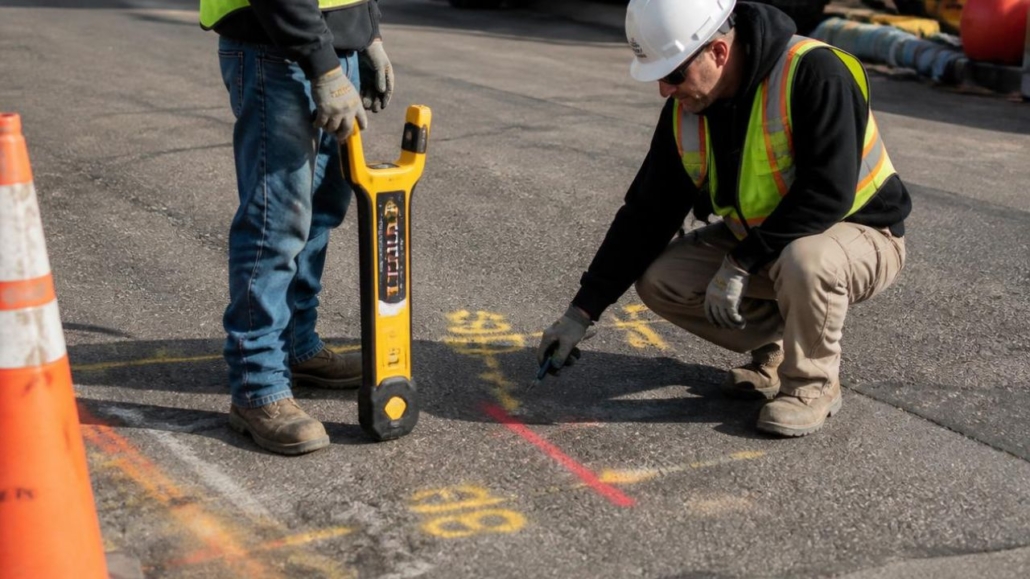
Commercial excavation in the San Francisco Bay Area carries significant risk due to aging water infrastructure and dense underground utility networks. Professional underground utility locating in San Francisco, CA helps contractors avoid costly strikes, project delays, and regulatory penalties before breaking ground.
Here’s what we break down: the detection methods that identify subsurface water and sewer lines, the notification rules under California’s Dig Safe Act, and the cost and liability factors contractors weigh before breaking ground across the Bay Area’s aging infrastructure.
Key Takeaways
- Underground utility locating uses GPR, electromagnetic detection, and vacuum excavation to identify subsurface water and sewer lines before excavation
- California’s Dig Safe Act requires two-working-day notice before digging, with penalties up to $100,000 for violations causing hazmat releases
- Water and sewer work accounts for 24% of all utility damage events nationwide, the highest rate among excavation types
- Approximately 20% of San Francisco’s water pipes are 100 years old, increasing strike risk during commercial excavation projects
- Professional locating services deliver sub-inch accuracy through potholing, compared to 18-24 inch tolerance from surface methods alone
Underground Utility Locating Defines Excavation Safety for Bay Area Contractors
Defining Utility Locating and Its Role in Excavation
Underground utility locating identifies and maps subsurface infrastructure before excavation to prevent accidental damage. Subsurface Utility Engineering (SUE) provides standardized quality levels ranging from records review to physical exposure of buried lines.
SUE quality levels range from Level D, which relies on existing records and oral recollection, to Level A, which physically exposes the utility. The full breakdown appears in the Primary Locating Methods and Their Accuracy Levels table below.
Quality Level B uses surface geophysical methods including GPR and electromagnetic detection to determine horizontal pipe positions. Quality Level A achieves highest accuracy through vacuum excavation, confirming horizontal and vertical position plus material type and condition.
California’s Dig Safe Act and Notification Requirements
California’s Dig Safe Act of 2016 established the Underground Facilities Safe Excavation Board to enforce excavation safety standards. Excavators must notify 811 at least two full working days before digging, not including the notification day.
Penalties scale with the severity of the violation:
| Violation Type | Penalty Per Occurrence |
| Negligent violation | Up to $10,000 |
| Knowing and willful violation | Up to $50,000 |
| Violation causing a hazmat release | Up to $100,000 |
How Utility Locating Supports Compliance with Local Permitting and Insurance Standards
San Francisco small excavation permits require approval within 5 business days plus a minimum 72-hour posting before work begins. Mountain View mandates pre-construction meetings at least 3 days before construction starts for excavation projects.
General liability insurance minimums for California municipal encroachment permits typically require $1,000,000 single limit for standard work. Deep excavation exceeding 6 inches in public streets demands $2,000,000 combined single limit coverage.
Underground Utility Locating Reduces Water Main Strike Risk
The Risk Landscape: Aging Water Infrastructure in the Bay Area
California’s drinking water infrastructure received a D+ grade in the 2025 ASCE report, downgraded from C in 2019. The state’s overall infrastructure grade remains C-, reflecting persistent underinvestment in water systems.
California wastewater infrastructure averages 50 to 60 years in age across pipe and manhole components. The national water infrastructure investment gap reaches $99 billion annually according to ASCE’s 2024 analysis.
Common Causes of Water Main Strikes During Commercial Excavation
Water and sewer work represented 24% of all utility damage events in 2024, the largest share of any excavation type nationwide. Failure to notify 811 beforehand accounted for 24.54% of damages, the most common root cause.
Northern and Central California recorded 1,247 incidents where contractors or homeowners damaged underground lines in 2025. In 55% of those cases within PG&E territory, 811 was not called beforehand.
The Role of Accurate Locates in Preventing Damage and Liability
Sixty-four percent of contractors struck utility lines at least 2 feet outside marked locations according to AGC’s 2024 survey. California law holds excavators liable for damages resulting from failure to comply with notice and marking-protection requirements.
GPRS reports 99.8% accuracy across 350,000+ projects since 2017 using combined detection methods. Projects incorporating SUE and potholing experience 60-80% fewer utility-related change orders compared to standard practices.
Primary Locating Methods and Their Accuracy Levels
Comparing Ground Penetrating Radar, Electromagnetic Detection, and Potholing
Potholing provides visual confirmation with sub-inch accuracy at specific exposure points. Ground penetrating radar and electromagnetic methods deliver 18-24 inch tolerance for horizontal position determination.
Electromagnetic detection alone cannot identify non-metallic pipes like PVC storm and sewer lines without tracer rods. GPR vs electromagnetic utility locating requires understanding each method’s strengths for complete subsurface mapping.
ASCE 38-02 Quality Levels and Their Applicability to Commercial Projects
ASCE 38-02 defines four quality levels for commercial projects, ranging from records review to physical exposure:
| Level | Method | What It Confirms |
| D | Existing records and oral recollection | Planning-stage estimates only |
| C | Records correlated with surveyed above-ground features | Improved position estimates |
| B | Surface geophysical methods (GPR, electromagnetic) | Horizontal position across the project area |
| A | Physical vacuum excavation exposure | Exact horizontal and vertical position, material, and condition |
Cost Considerations: Hiring Professionals vs. In-House Locating
GPR technician hourly rates range from $75 to $125, while electromagnetic operators charge $50 to $85 per hour. Equipment rental for GPR units runs approximately $400 to $1,750 monthly, with electromagnetic locator purchases costing $800 to $5,000.
Full GPR system purchases, including complementary equipment, reach approximately $65,000 with training costs. Professional services often deliver better cost savings than in-house programs when factoring equipment, training, and liability exposure.
The USA North 811 Call-Before-You-Dig Process and Private Locating Services
Notification Timelines and Utility Response Expectations
Standard 811 tickets remain valid for 14 calendar days from the call-in date. Utility owners have at least two working days to respond by marking sites or providing facility location information.
Mutual Agreement work within 2 feet of existing utilities requires an additional 2-day notification period. Work within 10 feet of high-priority facilities triggers the same extended timeline requirement.
Common Challenges with 811 Locates and Delay Impacts on Commercial Projects
Eighty-seven percent of contractors report 811 locators take longer than one business day to arrive on site. Twenty-five percent experience delays of 5 or more business days according to AGC survey data.
Telecom utilities cause 811 delays 49% of the time, the highest rate among utility types. Water utilities contribute delays 24% of the time, while gas utilities account for 21% of scheduling problems.
When and Why Contractors Use Private Locating Services like Coastline Utility
Sixty-four percent of contractors struck lines at least 2 feet outside marked locations despite calling 811. This accuracy gap drives adoption of utility locating for commercial construction projects using advanced private detection methods.
Forty-one percent of contractor firms now use ground-penetrating radar for improved subsurface mapping. Twenty-one percent employ drones or aerial survey, while 13% incorporate 3D mapping and GIS technologies.
Financial and Operational Consequences of Water Main Strikes
Direct Repair Costs and Liability Penalties Under California Law
Average repair costs for damaged utility lines reach $3,500 for gas and electric infrastructure in California, on top of the Dig Safe Act penalty tiers outlined above.
Violations that cause hazmat releases from gas or hazardous liquid pipelines add repair liability on top of the statutory penalty, and repeat violations raise insurance scrutiny at renewal.
Commercial Project Delays, Liquidated Damages, and Insurance Implications
Liquidated-damages clauses commonly specify $5,000 to $25,000 per day for schedule overruns on commercial contracts. A 10-day utility-strike delay can trigger $50,000 to $250,000 in contractual penalties alone.
General liability deductibles for commercial construction commonly range from $5,000 to $250,000 per claim. Multiple utility-strike claims within a policy period frequently trigger 20-40% premium increases at renewal.
Quantifying the Broader Impact on Bay Area Infrastructure and Contractors
Utility strikes cost the United States approximately $30 billion annually in direct damage costs. Additional indirect waste and excess costs add an estimated $61 billion to that national total.
One utility strike occurs roughly every 10 seconds across North America based on industry estimates. The 2024 CGA DIRT Report documented 196,977 unique damage incidents across the U.S. and Canada.
Bay Area Water and Sewer Infrastructure Condition Drives the Need for Precise Locating
San Francisco’s Aging Cast Iron Pipes and Break Statistics
SFPUC operates 1,200 miles of water distribution pipelines throughout San Francisco’s service area. Approximately 20% of those pipes are about 100 years old and constructed from cast iron.
SFPUC reports 100 to 200 water main breaks per year across the system. A July 2025 incident at 24th and Mission Streets occurred when a backhoe struck an unmarked domestic water main during a Public Works bus pad project.
Sewer System Modernization Efforts in San Mateo County
San Mateo’s sewer network spans 240 miles of pipe across five major drainage basins. The city’s Clean Water Program launched in 2015 as a $1 billion initiative mandated by a State Cease and Desist Order.
Sewer pipe design lifespan reaches 50 to 60 years for standard materials and construction methods. Postwar neighborhoods including Baywood, Beresford, and Hayward Park contain pipe now 65 to 80 years old.
East Bay Pipeline Materials, Age, and Capital Improvement Programs
EBMUD maintains 4,200 miles of water distribution pipeline serving 1.4 to 1.5 million customers. Half of that network was installed more than 50 years ago, with the oldest cast-iron sections exceeding 125 years.
EBMUD’s pipe composition includes 35% cast iron, 30% asbestos cement, 26% steel, and 9% PVC. The utility’s current five-year capital improvement program totals $2.8 billion for treatment, pipeline replacement, and pumping infrastructure.
Industry Data on Locating Accuracy and Contractor Practices
Contractor Compliance with 811 and the Prevalence of Locate Inaccuracies
Ninety-nine percent of contractor firms use the 811 system before excavating, according to AGC data. Ninety-five percent report awareness of local 811 notification laws and compliance requirements.
Despite high compliance rates, 64% of contractors struck lines at least 2 feet outside marked locations. Following best practices for safe digging in California requires supplementing 811 marks with professional verification methods.
Response Delays by Utility Type and Their Impact on Project Scheduling
Eighty-seven percent of contractors report 811 locators take longer than one business day to arrive. Twenty-five percent experience delays of 5 or more business days for complete utility responses.
Telecom providers cause delays 49% of the time, water utilities 24%, and gas utilities 21%. These timeline impacts demonstrate why Sacramento contractors reduce liability with private utility locating services that expedite project schedules.
Return on Investment for Subsurface Utility Engineering and Professional Locating
SUE delivers an average return on investment of $4.62 for every dollar spent on professional locating. Some projects report returns reaching $206 per dollar invested in comprehensive subsurface investigation.
Projects using SUE and potholing methods experience 60-80% fewer utility-related change orders. GPRS reports 99.8% accuracy across 350,000+ projects since 2017 using combined detection technologies.
The Impact of Underground Utility Locating on Preventing Costly Water Main Strikes in the San Francisco Bay Area
Professional utility locating provides essential water main strike prevention across aging Bay Area infrastructure networks. Combining Quality Level A vacuum excavation with surface geophysical methods delivers the accuracy commercial projects require for safe excavation.
Understanding underground utilities in California helps contractors navigate complex regulatory requirements and subsurface conditions. A comprehensive utility locating checklist before excavation ensures every compliance step receives proper attention before ground disturbance.
Utility locating benefits extend beyond immediate excavation risk to encompass long-term project performance and contractor reputation. The San Francisco Bay Area’s combination of century-old cast-iron mains, dense utility corridors, and strict regulatory oversight creates a unique excavation risk that demands professional subsurface investigation.
Coastline Utility combines advanced GPR technology, electromagnetic detection, and vacuum excavation to deliver precise subsurface mapping for commercial and residential projects. The family-owned company serves the Central Coast and San Francisco Bay Area with responsive service and accurate documentation that protects project timelines and reduces liability exposure.
Schedule Underground Utility Locating Before You Break Ground
Aging cast-iron mains and dense utility corridors make the San Francisco Bay Area one of the riskiest regions in California for an unmarked water main strike. Coastline Utility combines GPR, electromagnetic detection, and vacuum excavation to give your crew sub-inch accuracy before the first shovel hits the ground.
As a female-owned, family-run company serving the Central Coast and San Francisco Bay Area, Coastline Utility keeps your project on schedule and your crew protected from costly strikes. Get a quote or call 669-371-0822 to schedule your locate.
Frequently Asked Questions
Q1. How much notice does California’s Dig Safe Act require before excavation?
A. Excavators must notify USA North 811 at least two full working days before digging, not counting the day the notification is made. Utility owners then have at least two working days to respond with markings or facility location information. Work that falls within 2 feet of an existing utility, or within 10 feet of a high-priority facility, triggers an additional notification period. Missing this window is the most common root cause of utility damage statewide.
Q2. What is the difference between GPR and electromagnetic utility locating?
A. Ground penetrating radar and electromagnetic detection both deliver 18 to 24 inch tolerance for horizontal position, but they detect different materials. Electromagnetic detection alone cannot identify non-metallic pipes such as PVC storm and sewer lines without a tracer rod, while GPR reads subsurface reflections regardless of pipe material. Combining both methods gives contractors a fuller picture of what lies underground before potholing confirms the exact position.
Q3. Why do contractors still hire private locators after calling 811?
811 marks public utility mains, but AGC survey data shows 64% of contractors have struck a line at least 2 feet outside the marked location even after calling in. Private locating services like Coastline Utility add Quality Level A verification through potholing, which confirms horizontal and vertical position, material type, and condition at the exact point of excavation. That extra step closes the accuracy gap that 811 marks alone leave open.
Q4. How much does professional utility locating cost compared to an in-house program?
A. GPR technicians typically charge $75 to $125 per hour, while electromagnetic operators run $50 to $85 per hour. Building an in-house program means purchasing equipment, which can reach roughly $65,000 for a full GPR system plus training. For most contractors, hiring a professional locating service costs less than building and maintaining that capability internally, especially once liability exposure is factored in.
Q5. What happens if a contractor strikes a water main during excavation?
A. A strike can trigger direct repair costs, a Dig Safe Act penalty based on the violation tier, and liquidated-damages clauses that commonly run $5,000 to $25,000 per day of resulting delay. Multiple claims within a policy period can also raise general liability premiums 20 to 40% at renewal. Professional locating before excavation begins is designed to prevent these compounding costs rather than address them after the fact.
