
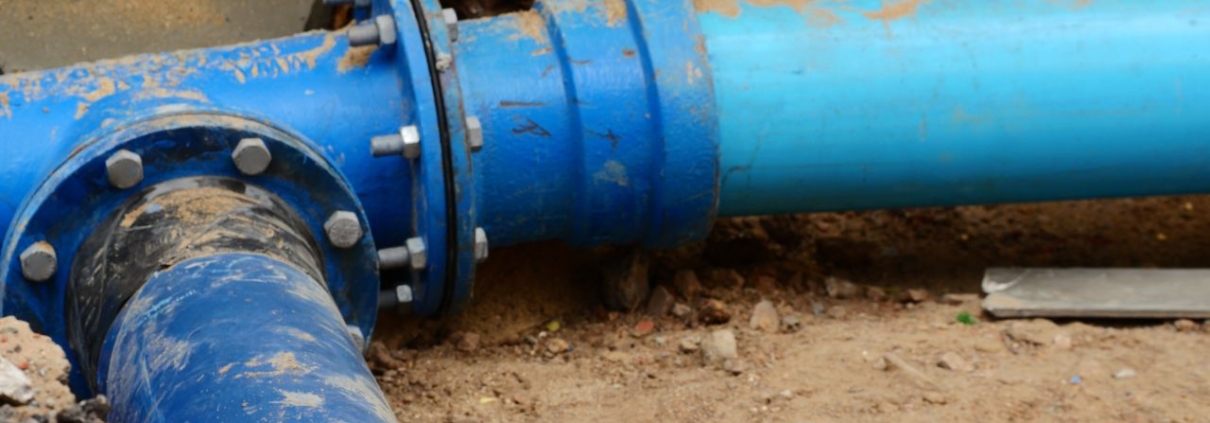
Underground Water Line Locating for Commercial Properties in the Bay Area
Commercial property development in the San Francisco Bay Area depends on knowing what lies beneath the surface before excavation begins. Underground water line locating identifies the exact position of water mains, service laterals, and sewer lines to prevent utility strikes that cost tens of thousands in repairs, delays, and regulatory penalties.
Read on for California’s Dig Safe Act notice and penalty rules, the detection methods contractors use to close the accuracy gap 811 leaves behind, and the real repair, delay, and liability costs a Bay Area water line strike can trigger.
Key Takeaways
- Water and sewer excavation accounts for 24% of all utility damage events nationwide
- California’s Dig Safe Act requires two working days’ notice before excavation, with penalties up to $100,000
- 64% of contractor utility strikes occur when lines are marked at least 2 feet off actual location
- Potholing provides sub-inch accuracy compared to 18–24 inch tolerance for GPR and electromagnetic methods alone
- Subsurface Utility Engineering delivers an average $4.62 return for every $1 spent
Underground Water Line Locating Identifies Buried Infrastructure Before Excavation Begins
Underground water line locating uses specialized equipment to map the horizontal and vertical position of buried water infrastructure before excavation. This process prevents costly damage to water mains, service connections, and sewer lines that can halt construction projects and trigger regulatory violations.
Commercial water line locating protects contractors from liability while ensuring compliance with California law. Accurate underground mapping of subsurface utilities reduces change orders, prevents emergency repairs, and maintains project schedules in densely developed urban areas.
Commercial Properties Contain Three Key Types of Water Lines
Commercial properties contain three primary water line categories: municipal supply mains, service laterals, and fire suppression systems. Supply mains range from 6 to 16 inches in diameter and deliver pressurized water from treatment facilities.
East Bay Municipal Utility District infrastructure illustrates the material diversity contractors encounter during excavation. EBMUD’s 4,200-mile distribution network consists of 35% cast iron, 30% asbestos cement, 26% steel, and 9% PVC pipe, with San Francisco maintaining approximately 20% of its water pipes as 100-year-old cast iron installations.
Damaging Water Lines During Excavation Carries Significant Risk
Utility strikes cost the United States approximately $30 billion annually in direct damage expenses. An additional $61 billion in indirect waste and excess costs compounds this financial burden.
A single utility strike occurs roughly every 10 seconds in North America, totaling 400,000 to 800,000 incidents annually. The average cost to repair a damaged utility line in Northern California reaches $3,500 for gas and electric infrastructure, with water main repairs often exceeding this baseline due to flood damage and emergency response.
Bay Area Infrastructure Age Increases Locating Precision Needs
The San Francisco Public Utilities Commission operates 1,200 miles of water pipelines experiencing 100 to 200 main breaks annually. Half of EBMUD’s pipeline network was installed more than 50 years ago, with some cast-iron sections exceeding 125 years of continuous service.
Aging infrastructure increases the precision required for safe excavation around deteriorated pipe materials. California’s drinking water infrastructure grade declined from C in 2019 to D+ in 2025, reflecting deferred maintenance and aging systems across municipal water networks.
Underground Water Line Locating in California Follows Strict Dig Safe Act Requirements
California Government Code Section 4216, known as the Dig Safe Act, establishes mandatory notice requirements for all excavation projects. Excavators must contact the regional notification center at least two full working days before digging, excluding the notification day.
The California Underground Facilities Safe Excavation Board enforces these requirements through civil penalties and compliance investigations. Standard ticket validity extends 14 calendar days from the call-in date, requiring renewal notices if work continues beyond that window.
The Dig Safe Act Sets Excavator Notice and Marking Requirements
The two-working-day notice requirement mandates excavators pre-mark sites before contacting USA North 811. White paint or chalk designates excavation boundaries on paved surfaces, while white flags or stakes mark unpaved areas.
Utility owners have at least two working days to respond by field-marking facilities, providing location information, or issuing an all-clear notification. Excavators must confirm all utility members listed on the ticket have responded before beginning ground disturbance.
Non-Compliance with Gov. Code §4216 Carries Steep Penalties
Negligent violations of the Dig Safe Act carry penalties up to $10,000 per incident. Knowing and willful violations escalate penalties to $50,000 per occurrence, with damages to gas or hazardous liquid pipelines causing material release triggering maximum penalties of $100,000.
Excavators who damage subsurface installations due to non-compliance face liability to operators for all resulting damages, costs, and expenses. Operators who fail to timely or accurately field-mark utilities without reasonable basis face liability to compliant excavators, including liquidated damages for delays.
USA North 811 Facilitates the Call-Before-You-Dig Process
USA North 811 serves Central and Northern California, including San Luis Obispo, San Mateo, and Santa Barbara counties. Excavators must call 811 or submit online requests two full working days before digging, with Wednesday as the latest submission date for weekend projects.
The free 24/7 service coordinates responses from all utility members in the excavation area. Work within 2 feet of existing utilities requires an additional 2-day Mutual Agreement period, while high-priority facility marking within 10 feet adds 2 days to standard response windows.
Bay Area Commercial Contractors Rely on Professional Locating Services for Added Precision
The public 811 system provides basic utility marking, but commercial projects often require greater precision than standard locate services deliver. Professional locating companies combine multiple detection technologies to achieve accuracy levels that prevent strikes and support tight construction schedules.
Commercial contractors use private locating services to supplement 811 responses, particularly for complex sites with dense utility concentrations. Utility locating for commercial construction projects addresses gaps in public marking systems while providing documentation that supports regulatory compliance and liability protection.
Public 811 Locates Fall Short of Private Locating Accuracy
The Associated General Contractors of America reports that 64% of contractors struck utility lines marked at least 2 feet outside their actual location. This accuracy gap persists despite 99% of contractor firms reporting regular 811 system use and 95% awareness of local call-before-you-dig laws.
Response time compounds accuracy challenges for commercial projects. 87% of contractors report locator arrival times exceeding one business day, with 25% waiting 5 or more business days for complete utility marking responses.
Contractors Use Multiple Technologies to Locate Water Lines
Ground-penetrating radar adoption reached 41% among contractor firms addressing 811 accuracy limitations. Drones and aerial survey technologies account for 21% of contractor-adopted detection methods, while 3D mapping and GIS integration represent 13% of supplemental locating approaches.
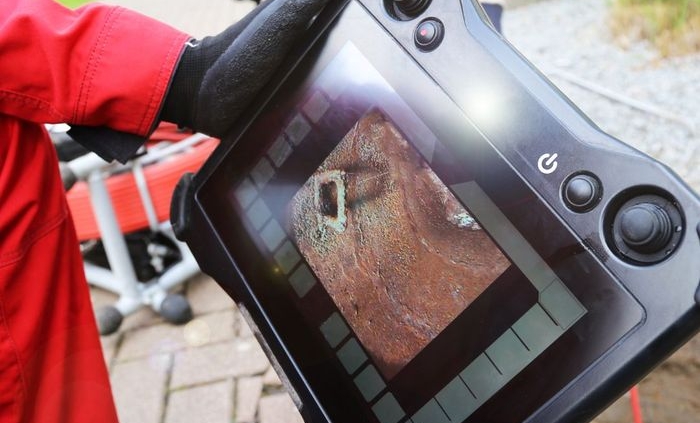
Professional utility detection combines electromagnetic locators and GPR systems to identify both metallic and non-metallic infrastructure. GPR versus electromagnetic utility locating methods each offer distinct advantages depending on pipe material, soil conditions, and required accuracy levels.
Locating Accuracy and Response Times Shape Project Outcomes
Telecom utilities cause 811 response delays 49% of the time, followed by water utilities at 24% and gas utilities at 21%. These delays compress construction windows and increase the risk of starting work with incomplete or inaccurate utility marking.
Projects incorporating Subsurface Utility Engineering and potholing experience 60 to 80% fewer utility-related change orders. SUE investments deliver an average $4.62 return for every dollar spent, with some projects reporting returns up to $206 per dollar invested.
Three Methods Detect Underground Water Lines: EM, GPR, and Potholing
Three primary methods detect underground water infrastructure: electromagnetic locating, ground-penetrating radar, and physical exposure through vacuum excavation. Each method provides different accuracy levels and applies to specific pipe materials, soil conditions, and project requirements.
Commercial projects typically combine multiple detection technologies to verify utility positions before excavation. Method selection depends on pipe material composition, required accuracy tolerance, and whether horizontal position alone or both horizontal and vertical confirmation is necessary.
Ground-Penetrating Radar and Electromagnetic Locating Compared
Electromagnetic locators trace metallic pipes effectively but cannot detect PVC or other non-conductive materials without tracer wire, while GPR identifies non-metallic utilities but requires skilled interpretation in challenging soil conditions.
| Method | Equipment Cost | Monthly Rental | Technician Rate |
| Ground-penetrating radar (GPR) | Up to $65,000 (full system) | $400 – $1,750 | $75 – $125/hr |
| Electromagnetic (EM) locating | $800 – $5,000 (purchase) | $300 – $1,500 | $50 – $85/hr |
| Combined EM + GPR baseline system | Starting at $19,000 | — | — |
Potholing and Vacuum Excavation Deliver the Highest Locating Accuracy
Potholing provides sub-inch accuracy through physical exposure of buried utilities, compared to an 18- to 24-inch tolerance for electromagnetic and GPR methods alone. Potholing service in California confirms both horizontal and vertical pipe position plus material type, diameter, and condition before full-scale excavation.
GPRS reports a 99.8% accuracy rate across 350,000 projects since 2017 using combined detection and verification methods. ASCE 38-02 Quality Level A designation requires physical exposure via vacuum excavation to confirm all utility characteristics, making potholing essential for high-risk excavation zones.
ASCE 38-02 Defines Four Quality Levels for Utility Data Collection
ASCE 38-02 sets four utility data quality levels, ranging from desktop records to full physical verification through vacuum excavation.
| Quality Level | Method | Confirms |
| D | Existing records and oral recollection | Planning-stage information only |
| C | Records correlated with visible surface features | Improved positional estimates |
| B | Surface geophysical methods (GPR, EM) | Horizontal utility position |
| A | Physical exposure via vacuum excavation | Horizontal + vertical position, type, size, material, condition |
Permitting and Scheduling Shape Water Line Locating Timelines
Bay Area excavation permits impose minimum processing periods and posting requirements that extend pre-construction timelines. San Francisco approves small excavation permits within 5 business days, but all permits require 72-hour minimum site posting before work begins.
Permit requirements stack with mandatory 811 notice periods, creating planning windows commercial contractors must account for when scheduling utility locating services. Best practices for safe digging in California include coordinating permit applications, 811 notices, and private locate services to maintain project momentum.
Bay Area Excavation Permits Follow Set Timelines and Requirements
San Francisco General Excavation Permits require signed applications, complete excavation drawings, utility company authorization letters if applicable, proof of liability insurance, and current Business Tax Registration Certificates. Mountain View requires pre-construction meetings with Public Works Inspectors at least 3 days before construction begins.
Small excavation permits covering projects under 15 days receive approval within 5 business days once contractor registration is complete. The mandatory 72-hour posting period following permit approval adds to the minimum 2-working-day 811 notice requirement, creating cumulative lead times of 1 to 2 weeks.
811 Notice Windows and Marking Times Impact Project Scheduling
Standard 811 tickets remain valid for 14 calendar days from the call-in date. Contractors must submit renewal notices 2 days before expiration if work extends beyond this window, creating potential gaps in legal excavation authorization if renewal timing is miscalculated.
Work within 2 feet of existing utilities requires an additional 2-day Mutual Agreement period beyond standard response windows. High-priority facility marking within 10 feet of sensitive infrastructure adds another 2 days to utility owner response obligations.
Utility Excavation Carries Key Insurance and Liability Considerations
General liability insurance minimums for standard construction work typically require $1,000,000 single-limit coverage. Excavation deeper than 6 inches in public streets increases required coverage to $2,000,000 combined single limits across most Bay Area jurisdictions.
Commercial construction general liability deductibles range from $5,000 to $250,000 per incident. Multiple utility-strike claims within a single policy period can trigger premium increases of 20 to 40% at renewal, compounding financial impact beyond immediate repair costs.
Utility Strikes Carry Steep Consequences and Costs on Commercial Sites
Utility strikes impose direct repair expenses, indirect delay costs, and long-term financial consequences through insurance and contractual penalties. The average damaged utility line repair costs $3,500 for gas and electric infrastructure in Northern California, with water main strikes often exceeding this baseline due to flooding and emergency response.
Property development safety extends beyond immediate repair costs to encompass schedule delays, idle equipment expenses, and regulatory compliance investigations. A single lost workday from strike-triggered work stoppages can cost $2,000 or more in idle labor and equipment overhead.
A Water Line Strike Triggers Predictable Repair and Delay Costs
These national figures hold true in the Bay Area, where water main strikes often exceed the $3,500 gas-and-electric repair baseline due to flooding and emergency response.
Liquidated Damages and Insurance Premiums Compound Financial Risk
Liquidated-damages clauses in commercial construction contracts commonly specify $5,000 to $25,000 per day for schedule overruns. A 10-day utility-strike delay can trigger $50,000 to $250,000 in contractual penalties before accounting for repair costs or insurance deductibles.
General liability deductibles for commercial construction range from $5,000 to $250,000 per claim. Multiple utility-strike claims can trigger 20 to 40% premium increases at policy renewal, creating compounding financial consequences that extend years beyond the initial incident.
Accurate Locating Mitigates These Consequences
Projects incorporating Subsurface Utility Engineering and potholing experience 60 to 80% fewer utility-related change orders than projects relying on basic 811 locates alone. SUE investments deliver an average return of $4.62 for every dollar spent.
Potholing provides sub-inch accuracy that eliminates position uncertainty during excavation near existing infrastructure. GPRS reports a 99.8% accuracy rate across 350,000 projects since 2017, demonstrating that combined detection technologies and physical verification prevent the majority of utility strikes when properly implemented.
Aging Bay Area Water Infrastructure Is Increasing Locating Challenges
Bay Area water systems operate on infrastructure installed 50 to 125 years ago, increasing both strike risk and repair complexity. Roughly 20% of San Francisco’s water pipes are century-old cast iron installations.
Half of EBMUD’s 4,200-mile pipeline network was installed more than 50 years ago. Some cast-iron sections exceed 125 years of continuous service, creating unpredictable failure points that complicate excavation planning.
San Francisco, San Mateo, and the East Bay Share Common Pipe Materials and Ages
EBMUD’s distribution network consists of 35% cast iron, 30% asbestos cement, 26% steel, and 9% PVC pipe. This material diversity requires detection methods capable of identifying both metallic and non-conductive utilities to ensure complete underground utility locating in San Francisco, CA coverage.
San Mateo’s sewer network totals 240 miles of pipe with design lifespans of 50 to 60 years. Postwar residential neighborhoods built in the 1940s and 1950s now operate pipe infrastructure 65 to 80 years old, exceeding original design life.
Aging Infrastructure Influences Risk and Locate Precision
Brittle, deteriorated pipe materials tolerate less contact during excavation, so tighter locate precision is essential to maintain safe clearance zones near aging Bay Area infrastructure.
Local Case Studies Highlight Water Main Strike Risks
A July 2025 incident at 24th and Mission Streets in San Francisco demonstrates strike risk even on public agency projects. During Public Works bus pad excavation, a backhoe struck an unmarked domestic water main, rapidly flooding the excavation area and halting construction.
September 2023 brought a 16-inch cast-iron main break at Fillmore and Green in Cow Hollow after the 1949-era pipe failed, flooding businesses and creating a street sinkhole. An October 2025 Sunnydale neighborhood water main break flooded homes, illustrating the ongoing pattern of aging infrastructure failures that compliance with utility marking regulations for businesses helps prevent through accurate pre-excavation mapping.
Best Practices and Strategic Benefits of Underground Water Line Locating for Bay Area Commercial Properties
Subsurface Utility Engineering and potholing deliver measurable returns: an average $4.62 back for every dollar spent, and 60 to 80% fewer utility-related change orders than projects relying on basic 811 locates alone.
Commercial contractors benefit from combining multiple detection technologies to verify utility positions before excavation begins. How Sacramento contractors reduce liability with private utility locating demonstrates broader regional adoption of professional locating services that supplement public 811 systems.
Bay Area commercial projects demand precision that accounts for aging infrastructure, complex material compositions, and tight urban development patterns. Coastline Utility combines ground-penetrating radar, electromagnetic detection, and vacuum excavation to deliver the accuracy levels commercial contractors need to protect timelines, budgets, and professional reputations.
Schedule Your Bay Area Water Line Locate with Coastline Utility
A missed water line stops your crew, extends your schedule, and risks Gov. Code §4216 penalties. Coastline Utility’s female-owned, family-run team combines GPR, electromagnetic detection, and vacuum excavation for the sub-inch accuracy public 811 marks cannot guarantee. Call (669) 371-0822 or request a free quote today, and get your site scoped within one business day.
Frequently Asked Questions About Underground Water Line Locating
Q1. Do I need underground water line locating if I already called 811?
A. Yes. USA North 811 marks public utilities only up to the meter or service connection, and 64% of contractor strikes involve lines marked at least 2 feet from their actual position. Private water line locating closes that gap, covering laterals, fire suppression lines, and utilities past the meter that 811 does not mark.
Q2. How accurate is professional water line locating compared to public 811 marks?
A. Electromagnetic and GPR methods typically locate lines within an 18 to 24 inch tolerance, while potholing through vacuum excavation confirms position within sub-inch accuracy. Commercial projects that combine detection technology with potholing report accuracy rates near 99.8% across hundreds of thousands of jobs.
Q3. What happens if I excavate without a valid 811 ticket in California?
A. Excavating without proper notice violates Government Code §4216 and can trigger penalties from $10,000 for negligent violations up to $100,000 for willful damage to gas or hazardous liquid lines. You also assume direct liability for repair costs, delay damages, and any resulting safety incidents.
Q4. How long does underground water line locating take before a Bay Area project can start?
A. Standard 811 notice requires two full working days, and permits in cities like San Francisco add a 72-hour posting period on top of that. Private locating services can often be scheduled within that same window, so most commercial projects budget one to two weeks of total lead time before digging.
Q5. Why do aging Bay Area water systems need extra locating precision?
A. Roughly half of EBMUD’s pipeline network and 20% of San Francisco’s water pipes are more than 50 years old, with some cast-iron sections exceeding a century in service. Brittle, deteriorated pipe material tolerates less contact during excavation, so tighter locate accuracy matters more on older infrastructure than on newer installations.
 Coastline Utility Services
 Coastline Utility Services
 Coastline Utility Services
 Coastline Utility Services
 Coastline Utility Services
  Coastline Utility Services
  Coastline Utility Services
 CoastLine Utility Services
  Coastline Utility Services